Lou Tavener President
Saturday, November 27, 2010
Sat 27 Nov working bee at Cockpit
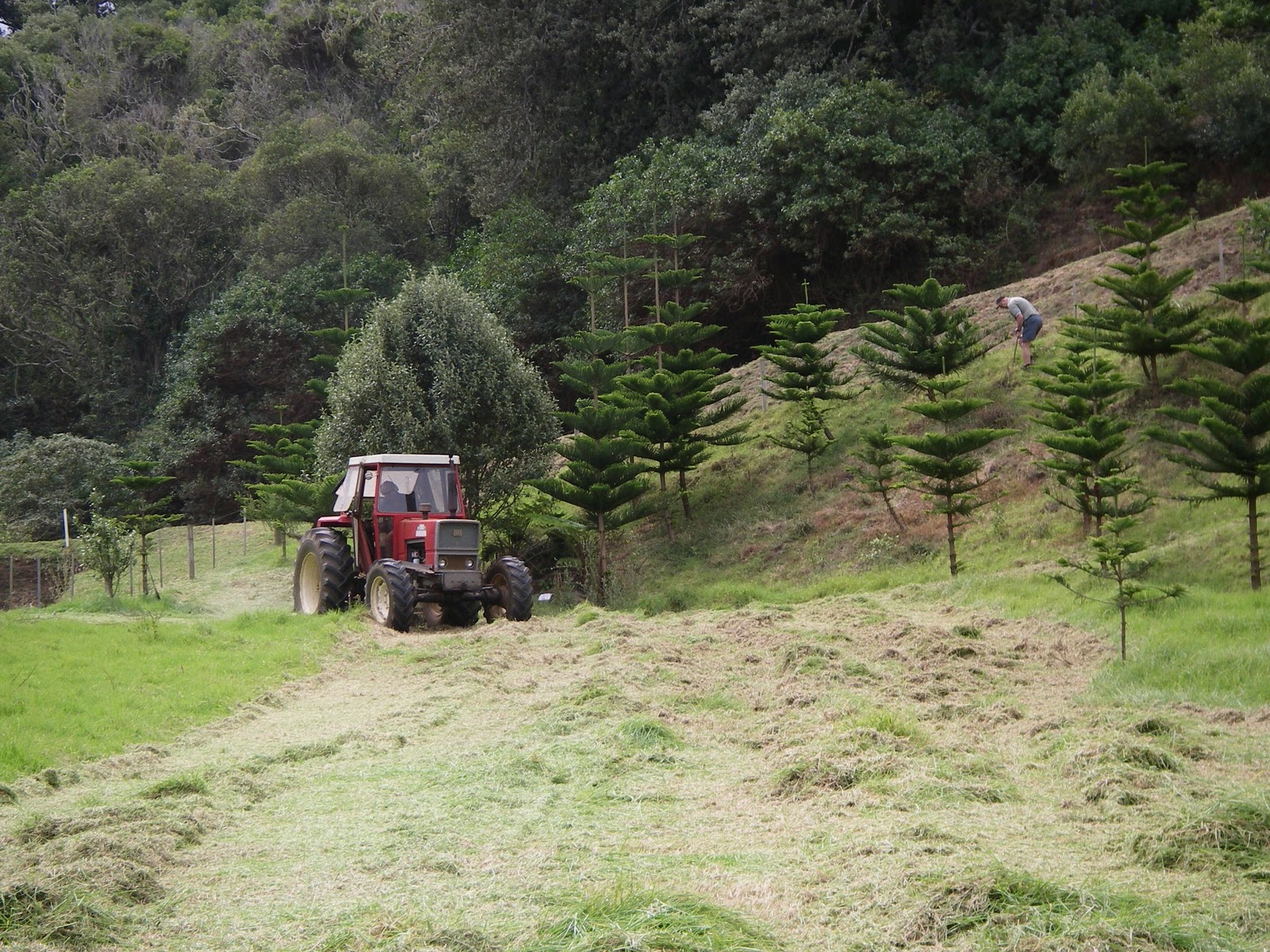
It was decided that the working bee on Sat 27th Nov would be another mowing day to tidy up the other end of our reserve area C3 & C4. Unfortunately there wasnt many people who showed up to help but we did well considering. Thank you to Dave Porter who came with his whipper snipper and worked on C3, Jimbo who brought the tractor & slasher and mowed Ruby's Glen, Dick Massicks on the muttock and me on the pruner. Thanks fe ucklun yorlye
Lou Tavener President
Friday, November 12, 2010
13 Nov 2010 Working bee to cleanup C1 & C2 areas
At last we have had a good week of weather and a sunny weekend! We had a good rollup today to mow and tidy C1 and C2 areas at Cockpit. Thankyou to Dick Massicks, Dave Porter, Laurel Quintal, Ben Hayes, Luke Adams, Don Brian, Jim, Brianna & me Taveners and George & Ada Nebauer. Thankyou to Jimbo for his mower that made short work of the long grass
George hard at work
Thanks fe ucklun yorlye
Lou Tavener - President
George hard at work
Thanks fe ucklun yorlye
Lou Tavener - President
Oct 2010 Not good weather for working bees
Due to the bad non-Spring like weather that plagued much of October; we scheduled and rescheduled working bees without success. As the areas we work in at Cockpit are steep, it becomes too slippery and dangerous to work in after rain. We had rain showers and high winds and the month slipped by without us getting a working bee in.
Dick Massicks & I did take some time to walk over the entire reserve area that we manage and came to a decision that we would need to use much of the money that we have fundraised for to employ someone to poison the woody weeds that are re-emerging after being cut off previously or coming up from seed. It is impossible to dig these weeds out especially on the steep terrain and we felt it was best to employ someone experienced to do it for us. George Nebauer has been employed to do this for us - he is one of our members and is a great worker who is experienced in this field. Thankyou George
Louise Tavener - President
Dick Massicks & I did take some time to walk over the entire reserve area that we manage and came to a decision that we would need to use much of the money that we have fundraised for to employ someone to poison the woody weeds that are re-emerging after being cut off previously or coming up from seed. It is impossible to dig these weeds out especially on the steep terrain and we felt it was best to employ someone experienced to do it for us. George Nebauer has been employed to do this for us - he is one of our members and is a great worker who is experienced in this field. Thankyou George
Louise Tavener - President
Thursday, October 21, 2010
22/10/10 Landcare applies for Toon Trust funding
Landcare applied today for funding from the Toon Trust.
This proposal is Stage 1 of a Project aimed at increasing native forest habitat on the Island by 10% through re-establishing the native coastal forest in Ball Bay Reserve, one of the largest areas of public land outside the National Park. Degradation of native habitat through land clearing, invasion by woody weeds (which today form 100% cover over more than 70% of the Reserve) and grazing, has destroyed the original native coastal forest, resulting in the disappearance from this part of the Island of almost all native bird species and threatened the local extinction of endemic plant species such as Euphorbia norfolkiana.
Luckily, though significantly reduced in diversity and extent, a small number of native trees and shrubs remain with potential as natural seed sources to augment rehabilitation planting.
Rehabilitation of native forest habitat through this large-scale (for Norfolk Island) project will directly engage the community, providing skills and impetus to community environmental and landcare groups, participation by local land owners, and demonstrate how native habitat can successfully be re-established on other, privately owned weed infested areas of the Island.
Large areas of Ball Bay Reserve were fenced to exclude cattle in the early 1970’s to enable re-afforestation and in the late 1980’s the majority of the Reserve was fenced to enable a number of Commonwealth-funded (Bushcare and Green Corps) environment projects to be undertaken. Unfortunately, since that time cattle have been allowed to roam through the Reserve with significant damage to remnant native vegetation and to planting areas.
Re-establishing native forest over the majority of the Reserve is the key management strategy of the Ball Bay Reserve Plan of Management. The re-habilitation of native forest habitat is a priority of the Norfolk Island Threatened Species Recovery Plan(EPBC Act).
This Stage 1 Project will enable grazing of the majority of Ball Bay Reserve by stock to be controlled. This is essential to the re-establishment of native forest habitat in Ball Bay Reserve.
If we are successful; The Norfolk Island Forestry department will partner Landcare in this application by the supply of fence posts, labour,timber for cattle yards, post & rail fence and gates, a cattlestop,pump, water tank & trough for stock and signs.
This proposal is Stage 1 of a Project aimed at increasing native forest habitat on the Island by 10% through re-establishing the native coastal forest in Ball Bay Reserve, one of the largest areas of public land outside the National Park. Degradation of native habitat through land clearing, invasion by woody weeds (which today form 100% cover over more than 70% of the Reserve) and grazing, has destroyed the original native coastal forest, resulting in the disappearance from this part of the Island of almost all native bird species and threatened the local extinction of endemic plant species such as Euphorbia norfolkiana.
Luckily, though significantly reduced in diversity and extent, a small number of native trees and shrubs remain with potential as natural seed sources to augment rehabilitation planting.
Rehabilitation of native forest habitat through this large-scale (for Norfolk Island) project will directly engage the community, providing skills and impetus to community environmental and landcare groups, participation by local land owners, and demonstrate how native habitat can successfully be re-established on other, privately owned weed infested areas of the Island.
Large areas of Ball Bay Reserve were fenced to exclude cattle in the early 1970’s to enable re-afforestation and in the late 1980’s the majority of the Reserve was fenced to enable a number of Commonwealth-funded (Bushcare and Green Corps) environment projects to be undertaken. Unfortunately, since that time cattle have been allowed to roam through the Reserve with significant damage to remnant native vegetation and to planting areas.
Re-establishing native forest over the majority of the Reserve is the key management strategy of the Ball Bay Reserve Plan of Management. The re-habilitation of native forest habitat is a priority of the Norfolk Island Threatened Species Recovery Plan(EPBC Act).
This Stage 1 Project will enable grazing of the majority of Ball Bay Reserve by stock to be controlled. This is essential to the re-establishment of native forest habitat in Ball Bay Reserve.
If we are successful; The Norfolk Island Forestry department will partner Landcare in this application by the supply of fence posts, labour,timber for cattle yards, post & rail fence and gates, a cattlestop,pump, water tank & trough for stock and signs.
Saturday, September 25, 2010
Planting day at Cockpit Sun 26 Sept 2010
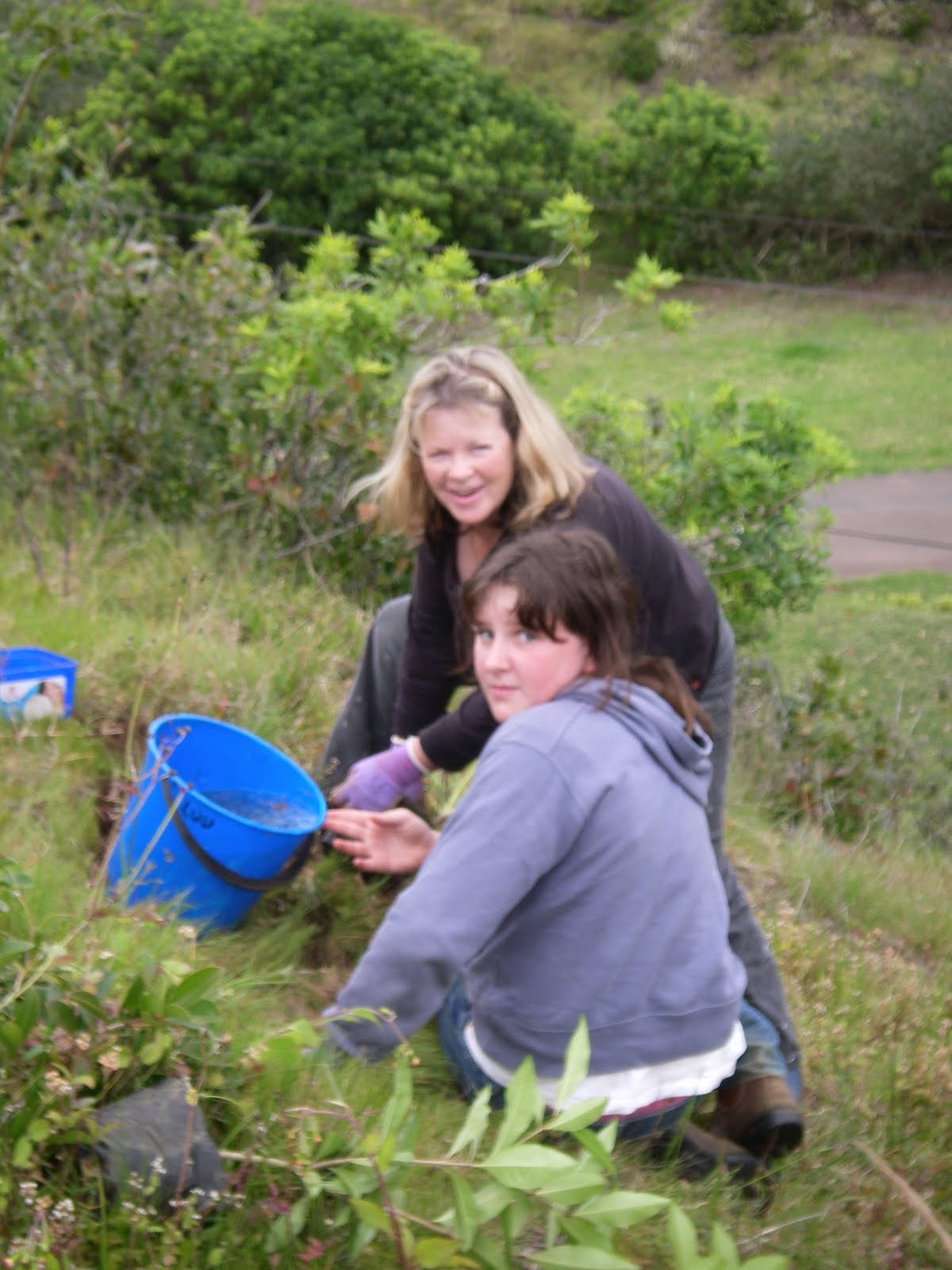
We had a perfect day for planting this morning with it being overcast and not too hot and with showers forecast for the next few days. Thanks to Jimbo who backed his truck with the trees and equipment halfway up the slope; it wasnt such a hard slog to carry the trees into their positions for planting. Thankyou to Jimbo Tavener and Wayne Derby who got on the hole borers and Alison & Lindsay Ford, Ben Hayes, Lou Tavener, Dick Massicks and Allan Tavener who got in and planted the 55 trees who had. Thankyou too to George Nebauer who got in and whippersnipped the low area and driveway - it looks great and it wasnt easy with the long grass throughout. We must also thank the Forestry Dept who supplied us the trees at no cost.
Ignore the date shown on the pics - Jimbo's camera wasnt set right
Sunday, September 12, 2010
Sept 10 Next planting day
The next working bee will be at Cockpit will be Sun 26 Sept 8.30am. This will be another planting day. We have around 55 trees to go in the ground so we should only be there a couple of hours if we get a few to help. The area being planted is steep and you need to be sure footed. We'll supply trees, gel and fertiliser as well as the post hole borers.
If you can't handle the steep slope there is a lot of mowing, whippersnipping etc needed on the lower slopes if anyone wants to do that while we plant. Morning tea afterwards
Sunday, September 5, 2010
Planting Day at Cockpit Sun 5th Sept 2010
Well at last we had a fine weekend to get on with our planned plantings which had been delayed for several weeks. The area being planted was real 'billy-goat' country and very steep. Despite this 55 mixed Norfolk native trees were planted. Thankyou to Dick, Wayne, Luke, Laurel, Lou, Lexi & Brianna who made up our small but effective team!
Subscribe to:
Posts (Atom)